How to Verify Peptide Purity: A Buyer's Guide
Understanding HPLC, Mass Spectrometry, and COA documentation is essential for sourcing quality research peptides. Here's what to look for.
Purity verification is the single most important factor when sourcing research peptides. Impure peptides can introduce variables that compromise research results, waste resources, and lead to irreproducible findings. Understanding the analytical methods used to verify peptide quality is essential for any researcher making sourcing decisions.
Key Analytical Methods
High-Performance Liquid Chromatography (HPLC)
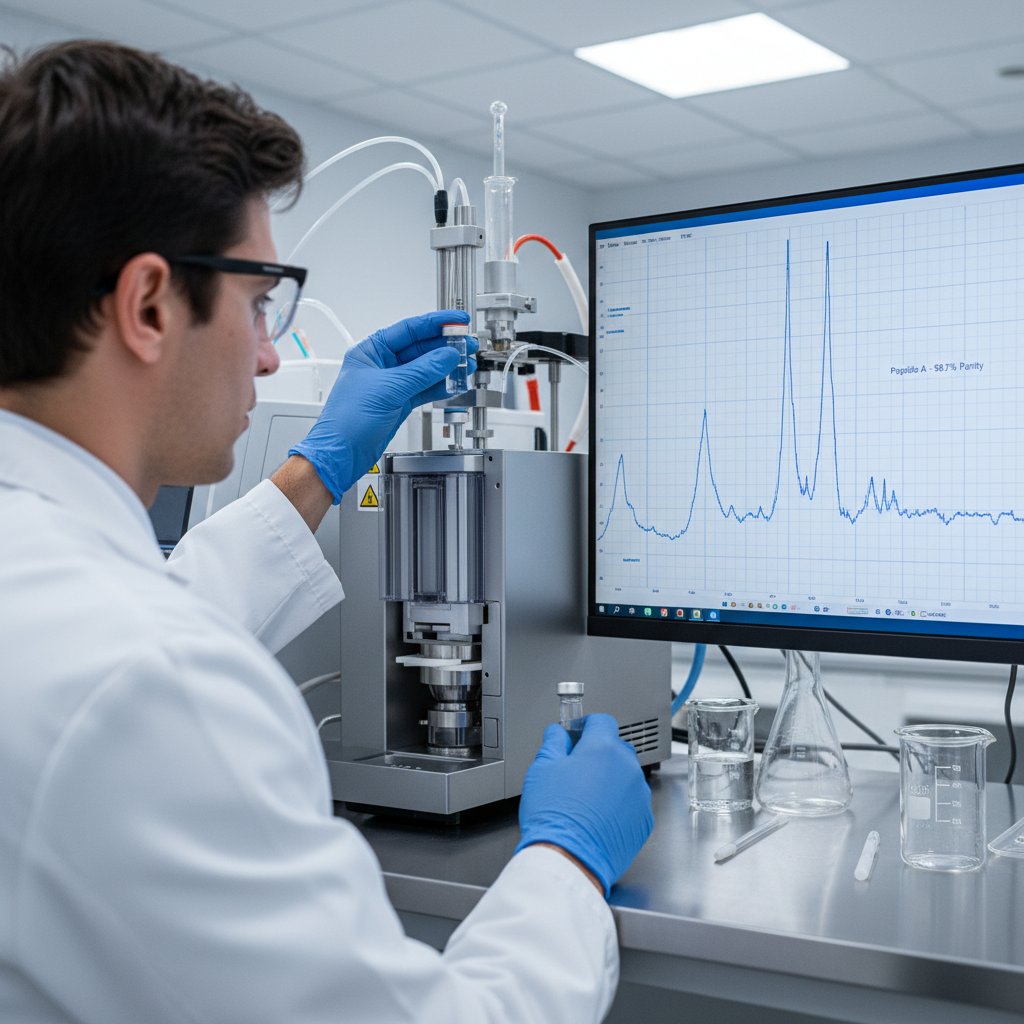
HPLC is the gold standard for peptide purity analysis. It separates a peptide sample into its component parts based on their chemical properties, allowing quantification of the target peptide versus impurities.
What to look for in HPLC results: - Purity percentage: For research-grade peptides, expect 95% minimum. Premium vendors consistently deliver 98-99%+ purity. - Retention time: The time at which the target peptide elutes from the column. This should be consistent and match reference standards. - Peak shape: A single, sharp, symmetrical peak indicates high purity. Broad peaks, shoulders, or multiple peaks suggest impurities. - Method details: The COA should specify the column type, mobile phase composition, flow rate, and detection wavelength.
Mass Spectrometry (Mass Spec)
Mass Spectrometry confirms the molecular identity of a peptide by measuring its molecular weight. While HPLC tells you how pure the sample is, Mass Spec tells you whether the sample is actually the correct peptide.
What to look for in Mass Spec results: - Observed molecular weight: Should match the theoretical molecular weight of the target peptide within acceptable tolerance (typically +/- 0.1%). - Ionization pattern: The charge state distribution should be consistent with the peptide's size and structure. - Method type: ESI-MS (Electrospray Ionization Mass Spectrometry) and MALDI-TOF are common methods for peptide analysis.
Amino Acid Analysis (AAA)
Amino Acid Analysis is an additional verification method that confirms the amino acid composition of a peptide. It is less commonly included on standard COAs but provides additional confidence in product identity.
Reading a Certificate of Analysis (COA)
A comprehensive COA should include:
- . Product identification: Peptide name, sequence, molecular formula, and theoretical molecular weight.
- . Batch/Lot number: Unique identifier linking the COA to a specific production run.
- . HPLC results: Chromatogram, purity percentage, and method details.
- . Mass Spec results: Spectrum showing observed molecular weight.
- . Physical appearance: Description of the product (typically white to off-white lyophilized powder).
- . Storage conditions: Recommended temperature and handling.
- . Date of analysis: When the testing was performed.
Red Flags in COA Documentation
Watch for these warning signs:
- Generic COAs: Documents that appear identical across different products or batches.
- Missing method details: COAs that state a purity percentage without showing the chromatogram or specifying the analytical method.
- No batch number: Without a batch-specific identifier, the COA cannot be verified against a specific production run.
- Outdated testing: COAs from months or years prior to the production date of the product you received.
- Round numbers: Purity readings of exactly 99.0% or 98.0% on every product are suspicious — real analytical results include decimal variation.
Third-Party vs. In-House Testing
In-house testing is performed by the vendor's own laboratory. It provides baseline quality control but is inherently subject to potential bias.
Third-party testing is performed by an independent analytical laboratory. It provides unbiased verification and is considered the higher standard for quality assurance.
The best vendors use both: in-house testing for routine QC on every batch, supplemented by periodic third-party verification to validate their in-house results.
Practical Steps for Researchers
- . Always request the COA before purchasing. Reputable vendors make these readily available.
- . Compare COAs across batches for the same product. Results should be consistent but not identical (identical results suggest the same document is being reused).
- . Verify the batch number on your product matches the batch number on the COA.
- . Consider independent testing of received products, especially for critical research applications.
- . Maintain records of all COAs for your research documentation.
Vendor Purity Benchmarks
Based on our testing and reviews, here is what to expect from top-tier vendors:
- Premium tier (9.0+ purity score): 99%+ HPLC purity, full Mass Spec on every batch, third-party verification program
- Standard tier (8.0-8.9): 98%+ HPLC purity, Mass Spec available on request, periodic third-party testing
- Budget tier (7.0-7.9): 96-98% HPLC purity, COAs available but less detailed, limited third-party testing
All products discussed are for research purposes only. Not for human consumption.
Disclaimer: All products referenced in this article are intended for laboratory and research use only. They are not intended for human consumption. This article is for informational purposes and does not constitute medical, legal, or professional advice. This site may receive compensation through affiliate partnerships with vendors mentioned.