Research Peptide Shipping: What to Expect
A practical guide to peptide shipping, cold chain requirements, packaging standards, and what to look for when your order arrives.
Shipping is a critical but often overlooked factor when sourcing research peptides. Peptides are sensitive biological molecules that can degrade if exposed to excessive heat, moisture, or mechanical stress during transit. Understanding shipping best practices helps researchers ensure they receive products in optimal condition.
Cold Chain Requirements
Most research peptides are shipped as lyophilized (freeze-dried) powder, which is significantly more stable than reconstituted solutions. However, even lyophilized peptides benefit from temperature-controlled shipping, particularly during warm months.
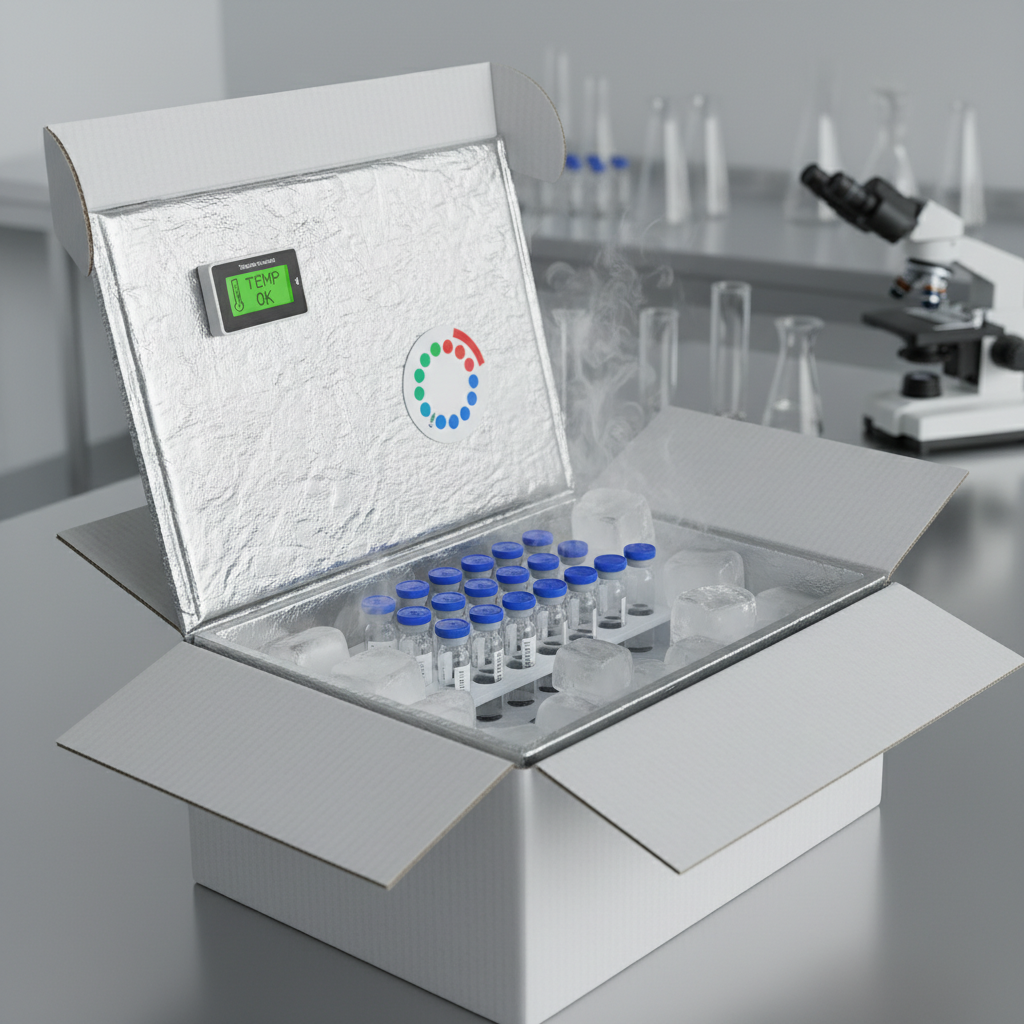
Standard cold chain practices include: - Insulated packaging: Foam-lined or insulated shipping containers that buffer temperature fluctuations. - Cold packs: Gel ice packs or frozen cold packs placed alongside the product. These maintain a cool environment for 24-48 hours in most conditions. - Thermal indicators: Some premium vendors include temperature indicators that show whether the package exceeded safe temperature thresholds during transit.
What to Look For When Your Package Arrives
When receiving a peptide shipment, inspect the following:
- . Package condition: The outer packaging should be intact and not crushed or water-damaged.
- . Cold pack status: If cold packs are included, check whether they are still cool. If completely warm in hot weather, the cold chain may have been broken for an extended period.
- . Product appearance: Lyophilized peptides should appear as a white to off-white powder or puck at the bottom of the vial. A clear, transparent residue or discoloration may indicate degradation.
- . Seal integrity: Vials should be sealed with a crimped cap and should not show signs of tampering.
- . Labeling: Each vial should be clearly labeled with the peptide name, quantity, batch/lot number, and storage instructions.
Domestic vs. International Shipping
Domestic US Shipping Most US-based vendors ship via USPS Priority Mail, UPS Ground, or FedEx. Transit times typically range from 1-5 business days depending on the vendor and shipping method selected.
Advantages: Shorter transit times mean less exposure to temperature extremes. Tracking is reliable and delivery confirmation is standard.
Typical costs: Free shipping thresholds range from $100-$200 at most vendors. Standard rates are typically $8-$15 for orders below the free shipping threshold.
International Shipping International peptide shipping involves additional considerations including customs clearance, longer transit times, and varying import regulations.
Key considerations: - Transit times of 7-21 business days are common for international orders. - Customs delays can extend delivery by days or weeks. - Some countries restrict importation of certain research peptides. - Temperature exposure risk increases with longer transit times. - Additional fees (duties, taxes) may apply depending on destination country.
Vendors with strong international shipping programs typically use express carriers (DHL, FedEx International) with tracking, include enhanced thermal protection, and provide guidance on customs documentation.
Shipping Speed by Vendor
Based on our evaluations:
Tips for Optimal Shipping Outcomes
- . Order early in the week: Placing orders Monday-Wednesday avoids packages sitting in warehouses or delivery vehicles over weekends.
- . Avoid summer Fridays: In warm months, Thursday/Friday shipments risk spending a hot weekend in transit.
- . Use expedited shipping for temperature-sensitive orders: The faster the transit, the less temperature exposure.
- . Provide accurate delivery information: Ensuring first-attempt delivery avoids additional days in transit.
- . Be available for delivery: If possible, retrieve packages promptly rather than letting them sit in mailboxes or on porches in extreme temperatures.
- . Store properly upon receipt: Immediately place received peptides in appropriate storage conditions per the product label.
All products discussed are for research purposes only. Not for human consumption.
Disclaimer: All products referenced in this article are intended for laboratory and research use only. They are not intended for human consumption. This article is for informational purposes and does not constitute medical, legal, or professional advice. This site may receive compensation through affiliate partnerships with vendors mentioned.