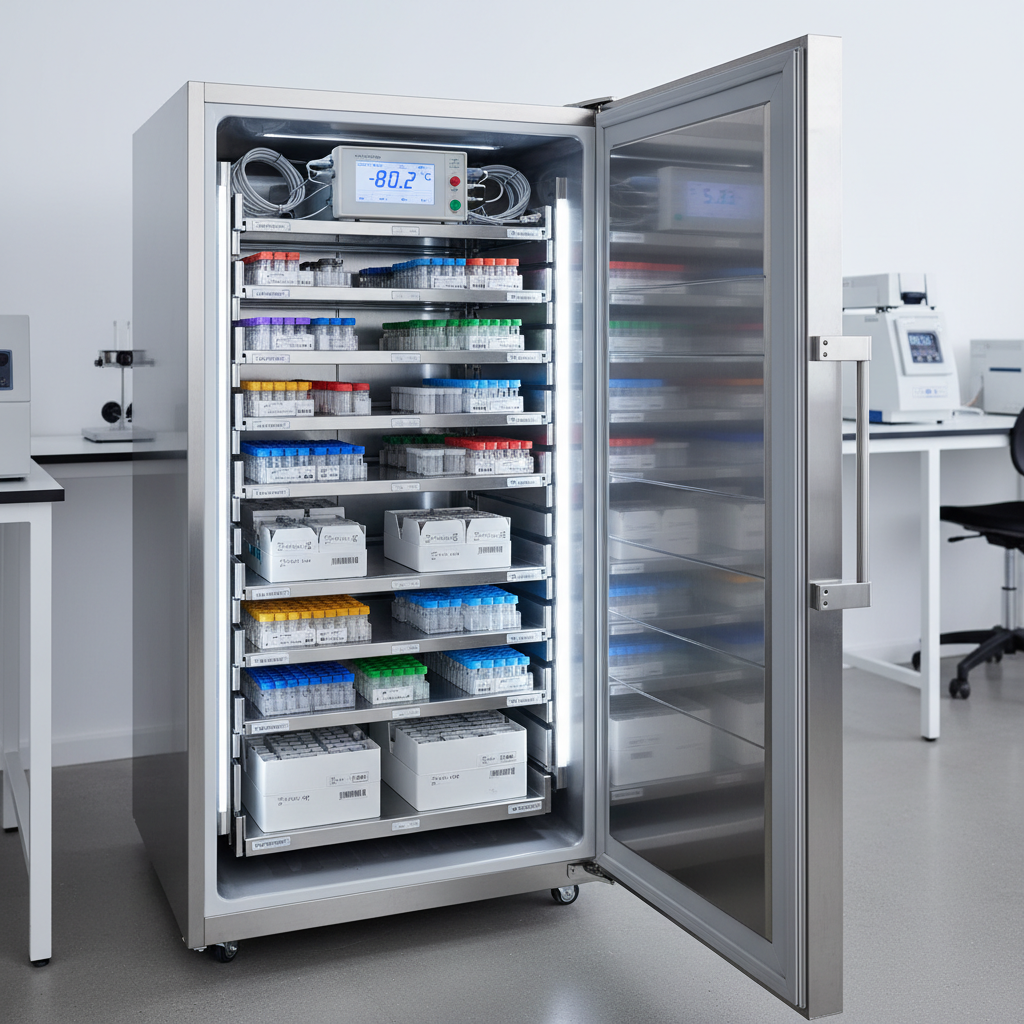
Peptide Storage Best Practices for Researchers
Proper storage is essential for maintaining peptide integrity. Learn the best practices for storing lyophilized and reconstituted peptides.
Proper storage is one of the most important yet frequently overlooked aspects of working with research peptides. Even the highest purity peptides will degrade if stored improperly, leading to inaccurate research results and wasted materials. This guide covers the essential storage practices for maintaining peptide integrity in a research setting.
Lyophilized (Freeze-Dried) Peptides
Lyophilization removes water from the peptide product, creating a stable powder that resists many forms of degradation. Properly stored lyophilized peptides can maintain their integrity for months to years.
Storage Conditions for Lyophilized Peptides
Short-term storage (weeks to months): - Temperature: 4°C (standard refrigerator) - Protection from light (store in original packaging or amber vials) - Keep sealed with original cap/septum
Long-term storage (months to years): - Temperature: -20°C (standard freezer) or -80°C (ultra-low freezer) for maximum stability - Store in airtight containers with desiccant - Minimize freeze-thaw cycles by aliquoting into single-use portions before freezing - Record storage date on each vial
Key Considerations for Lyophilized Storage
- . Moisture is the primary enemy. Exposure to humidity initiates hydrolysis and other degradation reactions. Always allow vials to reach room temperature before opening to prevent condensation from forming inside the vial.
2. Minimize exposure to air. Oxygen can cause oxidation of susceptible amino acid residues (methionine, cysteine, tryptophan). Use argon or nitrogen gas overlay when possible for long-term storage.
3. Avoid repeated temperature cycling. Each time a frozen peptide is warmed and re-frozen, some degradation occurs. Aliquoting before storage prevents this issue.
Reconstituted Peptides
Reconstituted (dissolved) peptides are significantly less stable than lyophilized powder and require more careful handling.
Reconstitution Best Practices
Solvent selection: - Bacteriostatic water: The most common solvent for general research applications. Contains 0.9% benzyl alcohol as a preservative. - Sterile water: Use when benzyl alcohol could interfere with the specific research application. - Acetic acid (0.1%): Recommended for peptides with poor water solubility (typically highly hydrophobic peptides). - DMSO: Last resort for peptides that are insoluble in aqueous solutions. Use minimal concentrations.
Reconstitution procedure: 1. Allow the lyophilized peptide to reach room temperature (15-20 minutes). 2. Add solvent slowly along the wall of the vial — do not inject directly onto the peptide cake. 3. Gently swirl the vial to dissolve. Do not vortex vigorously, as this can denature certain peptides. 4. Allow to dissolve completely before use. Some peptides may require 5-10 minutes.
Storage of Reconstituted Peptides
Short-term (days): - Store at 4°C - Use within 7-14 days for most peptides
Medium-term (weeks): - Store at -20°C in single-use aliquots - Use within 30 days
Long-term storage of reconstituted peptides is not recommended. Lyophilized form is always preferred for extended storage.
Peptide-Specific Considerations
Different peptides have different stability profiles based on their amino acid composition and structure:
More stable peptides (simpler sequences, no oxidation-prone residues): - BPC-157, Ipamorelin, CJC-1295 - Can tolerate slightly less stringent storage conditions
Less stable peptides (contain Met, Cys, Trp, or complex structures): - GHK-Cu (copper coordination is pH-sensitive) - FOXO4-DRI (long sequence with potential folding issues) - Require stricter temperature control and protection from oxidation
Light-sensitive peptides: - Melanotan peptides, some nootropic peptides - Store in amber vials or wrapped in foil
Equipment Recommendations
Essential - **-20°C freezer:** Adequate for most research-grade storage needs - **Desiccant packets:** Place in storage containers with lyophilized peptides - **Parafilm:** Wrap vial caps to create additional moisture barrier - **Labels:** Clear labeling with peptide name, concentration, date, and batch number
Recommended - **-80°C ultra-low freezer:** For long-term archival storage - **Argon gas canister:** For displacing oxygen in vials before sealing - **Temperature monitoring:** Continuous temperature logging for critical storage equipment - **Amber vials:** For light-sensitive peptides
Common Storage Mistakes to Avoid
- . Storing in a frost-free freezer without protection. Frost-free freezers cycle temperatures to prevent ice buildup. This cycling can damage peptides over time. Use a sealed container inside the freezer.
2. Opening cold vials immediately. Condensation will form inside the vial when cold air meets warm, humid room air. Always equilibrate to room temperature before opening.
3. Using a single vial for multiple aliquots over time. Each time you open the vial, you introduce moisture and contaminants. Pre-aliquot into single-use portions.
4. Storing near the freezer door. Temperature fluctuates most near the door. Place peptides in the back of the freezer for the most stable temperature.
5. Not recording storage dates. Without records, there is no way to track how long a peptide has been stored or estimate remaining usable life.
Stability Testing
For critical research applications, researchers may want to verify peptide stability over their storage period. This can be done by:
- . Setting aside a reference aliquot at the beginning of the storage period.
- . Periodically testing stored aliquots via HPLC and comparing to the reference.
- . Establishing a degradation curve to determine the practical shelf life under specific storage conditions.
Most lyophilized peptides stored at -20°C in sealed vials maintain >95% purity for 12+ months. Reconstituted peptides stored at -20°C typically maintain >90% purity for 30 days, but this varies significantly by peptide.
All products discussed are for research purposes only. Not for human consumption.
Disclaimer: All products referenced in this article are intended for laboratory and research use only. They are not intended for human consumption. This article is for informational purposes and does not constitute medical, legal, or professional advice. This site may receive compensation through affiliate partnerships with vendors mentioned.