Vendor Transparency Report: Who Publishes COAs and Who Doesn't
An accountability report examining which research peptide vendors proactively publish Certificates of Analysis and which make researchers request them. Transparency practices directly indicate vendor quality commitment.
Transparency in the research peptide industry is not a luxury — it is a fundamental quality indicator. Vendors who proactively publish Certificates of Analysis (COAs), testing methodology details, and quality assurance documentation demonstrate confidence in their products and respect for their customers' need to make informed sourcing decisions. Conversely, vendors who obscure or withhold this information create uncertainty that researchers must navigate.
This report evaluates the transparency practices of the major research peptide vendors, grading them on what they publish, how accessible it is, and how comprehensive the documentation proves to be.
Transparency Grading Methodology
We evaluate vendor transparency across five dimensions:
- . COA Availability (30%): Are COAs published on the website, available at checkout, or only provided upon request?
- . COA Completeness (25%): Do COAs include full analytical data (chromatograms, spectra) or only summary numbers?
- . Testing Methodology Disclosure (15%): Does the vendor describe their testing methods, equipment, and procedures?
- . Third-Party Verification (20%): Does the vendor publish third-party test results alongside in-house data?
- . Batch Traceability (10%): Can researchers trace COAs to specific production batches and verify that the COA matches their received product?
Vendor Transparency Grades
Tier A: Industry-Leading Transparency
Ascension Peptides — Grade: A
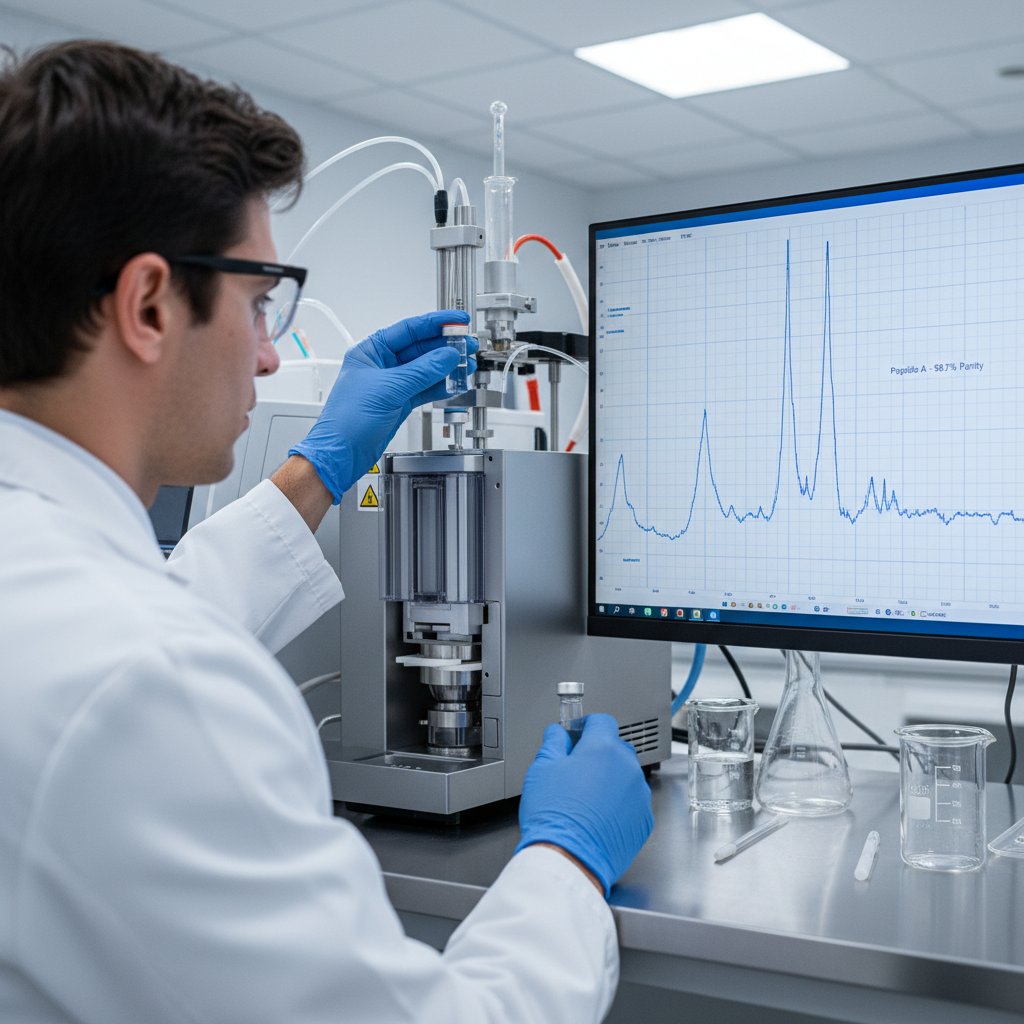
Ascension Peptides sets the transparency standard in the research peptide industry. Every product page includes a downloadable COA with full HPLC chromatogram, Mass Spec spectrum, and detailed method parameters. The COAs are batch-specific, and the batch number on the product label matches the COA batch number.
Their third-party testing results are published in a dedicated section of their website, updated quarterly with verification data from independent analytical laboratories. The testing methodology page describes their equipment (instrument models, column specifications, detector types), mobile phase compositions, and gradient programs in enough detail for a competent analyst to reproduce the methods.
What sets them apart: The level of analytical detail on their COAs exceeds what many contract testing laboratories provide. Researchers can evaluate not just the results but the methodology used to generate them.
Limitless Biotech — Grade: A-
Limitless Biotech provides comprehensive COAs directly on product pages with clear download links. Each COA includes HPLC data with chromatogram, Mass Spec data, and additional quality metrics. Their multi-step QA process is described on their website with sufficient detail for researchers to understand the quality checkpoints.
Third-party verification results are available, though they are published less frequently than Ascension's quarterly program. Batch traceability is well-implemented, with each product clearly linked to a specific production batch.
What sets them apart: The integration of COAs directly into the product page means researchers can review quality data before purchasing, without needing to navigate to a separate section or request documentation.
Tier B: Good Transparency
Sports Technology Labs — Grade: B+
Sports Technology Labs has one of the more transparent programs in the industry, with published third-party test results and in-house COAs available for most products. Their educational blog explains testing methodologies in accessible language, which helps researchers who may not have analytical chemistry backgrounds interpret the data.
The main limitation is that COA access is slightly less seamless than Tier A vendors — some products require clicking through to a separate testing results page rather than having documentation embedded directly on the product page.
Swiss Chems — Grade: B
Swiss Chems provides COAs for their product catalog, accessible through their website or upon request. The documentation quality is solid, with HPLC purity data and Mass Spec confirmation included in most COAs. Third-party testing is conducted and results are available upon request, though they are not as prominently published as Tier A vendors.
The sheer size of Swiss Chems' catalog (150+ products) makes comprehensive transparency more challenging than vendors with smaller product ranges. They handle this reasonably well, but researchers may occasionally need to request COAs for specific batches rather than finding them pre-published.
Core Peptides — Grade: B
Core Peptides provides batch-specific COAs and is responsive to documentation requests. Their support team can typically provide COAs within hours of a request. The documentation includes standard HPLC and Mass Spec data. Third-party testing is conducted on a rotating basis, and results are available upon request.
Their resource library includes helpful guides on interpreting COA data, which reflects a broader commitment to researcher education — an indirect form of transparency that helps customers better evaluate the documentation they receive.
Tier C: Adequate Transparency
Apollo Peptide Sciences — Grade: C+
Apollo Peptide Sciences provides COAs for their products, but access is sometimes less straightforward than higher-rated vendors. Their batch tracking system is unique and useful, but documentation completeness varies across the catalog. Select products have comprehensive COAs with full analytical data, while others have more summary-level documentation.
Their academic-style product descriptions include research citations, which demonstrates a different form of transparency — transparency about the research context for the products they sell, even if the analytical documentation is not as consistently detailed.
Bioinfinity — Grade: C
Bioinfinity provides COAs upon request, and the documentation generally includes HPLC purity percentages and basic Mass Spec data. However, COAs are not proactively published on product pages, requiring researchers to contact support. This creates a friction barrier that higher-rated vendors have eliminated.
The documentation provided, when requested, is adequate but less detailed than premium vendors. Chromatograms are not always included, and method details may be sparse. For budget-conscious researchers who independently verify products, this may be acceptable. For researchers who rely on vendor documentation as their primary quality assurance, the limited transparency is a concern.
Tier D: Limited Transparency
Amino Asylum — Grade: D+
Amino Asylum has received the most community feedback regarding documentation inconsistency. COAs are available for some products but not others. When available, the documentation quality varies — some COAs include full chromatograms and spectra, while others provide only summary purity numbers without supporting analytical data.
The inconsistency is the primary concern. A vendor that provides excellent documentation for some products but not others creates uncertainty about their overall quality program. Researchers sourcing from Amino Asylum should plan to independently verify product quality rather than relying on vendor documentation.
Industry Trends in Transparency
Positive Trends
Real-time COA access: More vendors are making COAs available directly on product pages rather than requiring requests. This shift reflects growing market expectation for pre-purchase quality verification.
Third-party testing programs: The number of vendors investing in periodic third-party verification has increased. While not yet universal, third-party testing is becoming an expected practice rather than a differentiator.
Method disclosure: Vendors are increasingly publishing details about their analytical methods, not just the results. This allows researchers to evaluate the rigor of the testing program itself.
Remaining Gaps
Standardization: There is no industry standard for COA format, content, or accessibility. This makes vendor-to-vendor comparison more difficult than it should be.
Frequency of updates: Some vendors update their published COAs infrequently, meaning the documentation on the website may not match the current production batch. Researchers should always verify that the batch number on their received product matches the COA.
Raw data availability: Very few vendors make raw analytical data files (e.g., .raw or .wiff mass spec files, .dat HPLC files) available. While this level of transparency is not broadly expected, it would represent a significant trust advancement.
Recommendations for Researchers
- . Prioritize vendors with proactive COA publishing. Vendors who make COAs available before purchase demonstrate confidence in their products and respect for researcher due diligence.
2. Evaluate COA quality, not just availability. A COA that states "Purity: 99%" without a chromatogram or method details is minimally useful. Look for COAs with actual analytical data.
3. Verify batch numbers. Always check that the COA batch number matches your product. COAs for different batches are not valid quality documentation for your specific product.
4. Request COAs before purchasing from vendors who do not proactively publish. If a vendor is unable or unwilling to provide COAs before purchase, that is a significant transparency red flag.
5. Consider transparency in vendor selection weighting. In our evaluation framework, transparency is not a separate category but a quality indicator that correlates strongly with overall vendor reliability.
All products discussed are for research purposes only. Not for human consumption.
Disclaimer: All products referenced in this article are intended for laboratory and research use only. They are not intended for human consumption. This article is for informational purposes and does not constitute medical, legal, or professional advice. This site may receive compensation through affiliate partnerships with vendors mentioned.